Skip to content
VentureLore Brand Logo
VentureLore

AI agents that complete multi-step work, safely

Agents go beyond a chat window: they call your systems, follow your rules and hand back to a person when unsure. We design them to be measurable, controllable and maintainable.

What this helps you achieve

  • Variable work handled

    Agents read context, choose tools and complete tasks that rigid automation cannot.

  • Measured quality

    Evaluation sets track accuracy so improvements and regressions are visible.

  • Bounded cost and risk

    Permissions, spending limits and approval steps keep agents inside safe limits.

  • Auditable actions

    Every tool call and decision is logged for review.

About this service

What is AI Agent Development?

An AI agent is software that can pursue a goal using several steps and tools. Instead of answering one question, it can look up information, call your systems, decide what to do next and report back.

Agents are most useful for work that varies from case to case, such as researching a lead, triaging a support request or preparing a draft for review. We give each agent a narrow job, only the tools it needs and clear limits. Actions that change data or contact customers require approval until the agent has proven reliable, and every step is logged so you can see how it reached a result.

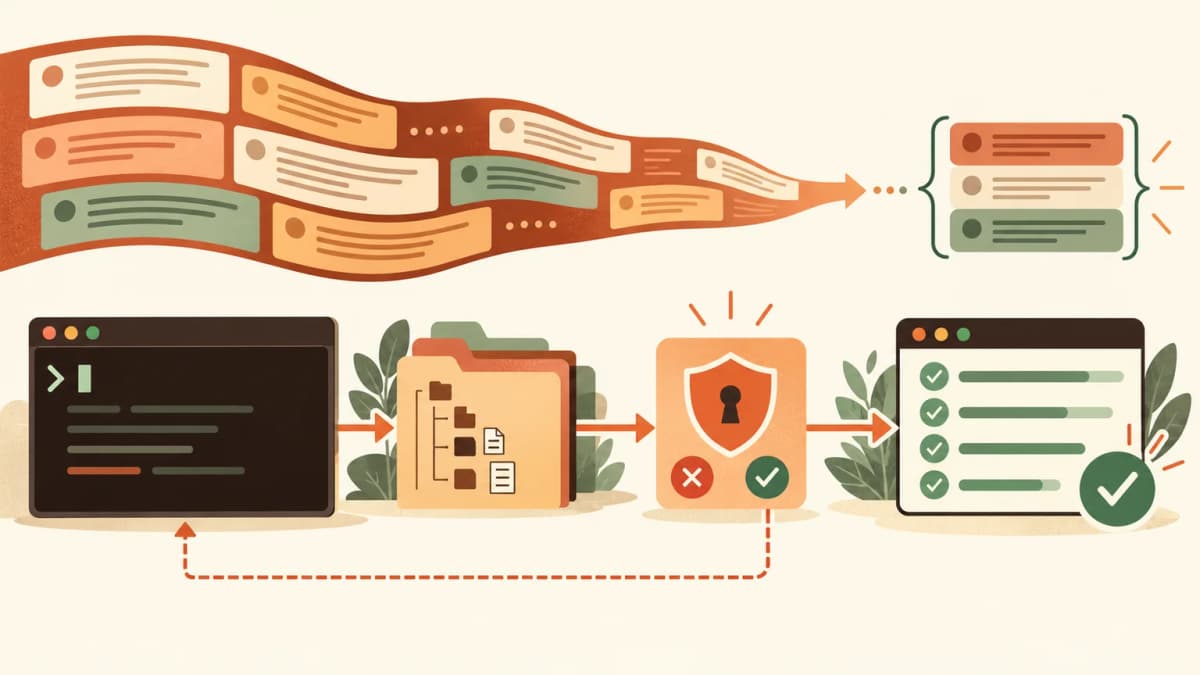
  1. 1.Goal

    A clear task with limits and success criteria.

  2. 2.Plan

    The agent decides which steps and tools to use.

  3. 3.Use tools

    It calls search, databases and APIs you have allowed.

  4. 4.Check

    Outputs are validated against rules and sources.

  5. 5.Approve

    A person confirms sensitive actions.

  6. 6.Report & log

    Results and every step are recorded.

Illustration: how an agent works inside defined limits, with human approval for sensitive actions.

Does this sound familiar?

Problems this solves

Tasks too variable for fixed rules

Work that depends on reading context and making judgement calls is hard to automate with simple if-then logic.

Knowledge scattered across systems

Answers live in documents, inboxes and tools, and people spend hours gathering context.

Repetitive research and prep

Preparing briefs, enriching records and summarising material consumes skilled time.

Concern about unreliable AI

Hallucinations, runaway actions and unpredictable cost make teams cautious, rightly.

What's included

Capabilities

Tool-using agents

Agents call your APIs, databases and SaaS tools through narrowly scoped functions.

Retrieval & memory

Ground answers in your documents and data, with sources, and keep relevant context between steps.

Guardrails & permissions

Allow-lists, input and output validation, and least-privilege credentials.

Evaluation & testing

Test sets built from real examples so quality is measured, not assumed.

Observability

Traces, logs and cost tracking for every run.

Human escalation

Clear handoff to a person when confidence is low or an action is sensitive.

How it works

How a AI Agent Development project runs

  1. Step 1: Define the job

    We write down what the agent should do, which tools it needs and what 'good' looks like.

  2. Step 2: Prototype & evaluate

    A working prototype is tested against real examples before we invest further.

  3. Step 3: Harden

    Add guardrails, permissions, error handling and approval steps.

  4. Step 4: Deploy & monitor

    Ship, watch real usage and tune using logs and evaluation results.

Business benefits

What you gain

Handles variable work

Agents cope with cases that do not fit a fixed rule, then hand over when they are unsure.

Controlled access

Each agent receives only the permissions and tools its task requires.

People stay in charge

Approval steps, spending limits and escalation paths keep humans in the loop.

Traceable decisions

Logs show the tools called and the information used for each outcome.

Improves with evidence

We test agents against real examples and adjust before widening their scope.

Practical examples

How this looks in a real business

Illustrative scenarios that show how we approach typical problems. They are examples, not descriptions of specific clients or guaranteed results.

Research assistant for sales

Situation
Before each call, a salesperson spends time reading a prospect's website and recent news.
Approach
An agent gathers public information, summarises the company and likely needs, and lists sources next to each statement so the salesperson can check them.
What changes
Call preparation is quicker and every claim can be traced to a source.

Support triage agent

Situation
A shared inbox mixes billing questions, bug reports and sales enquiries.
Approach
The agent classifies each message, looks up the customer's account, drafts a reply from your help content and routes it to the right person. Refunds and account changes always need approval.
What changes
Messages reach the right person with context and a draft already prepared.

Operations monitor

Situation
Someone checks dashboards every morning for unusual orders or stock levels.
Approach
An agent reviews the data on a schedule, flags what looks unusual and explains why, then posts the summary to your team chat.
What changes
Issues are noticed earlier, and nobody has to check manually.

Tools & technologies

What we build with

We choose tools to fit your systems and team. Links go to each tool's official documentation.

Use cases

Common starting points

Examples of where businesses typically begin. Your best first project depends on your workflow.

Sales research assistant

Researches prospects and prepares briefs and draft outreach for your review.

Support resolution drafting

Reads tickets, looks up account data and drafts accurate replies.

Internal operations assistant

Answers staff questions and performs routine admin tasks across tools.

Lead enrichment & qualification

Gathers company details and scores leads against your criteria.

Document review assistant

Checks documents against checklists and flags exceptions.

Reporting analyst

Queries your data, produces summaries and explains what changed.

FAQ

AI Agent Development: common questions

What is an AI agent?

An AI agent is software that uses a language model to decide what to do next, calls tools such as your CRM, database or email, and works through a multi-step task. Unlike a simple chatbot it can take actions, so it needs permissions, logging and limits.

How is an agent different from a chatbot or an automation?

An automation follows fixed steps. A chatbot answers questions. An agent chooses its steps based on context and can use tools to act. Many solutions combine all three, and we recommend the simplest option that solves the problem.

How do you stop an agent making mistakes?

By narrowing what it can do, validating its inputs and outputs, testing against real examples, logging every action and requiring human approval for sensitive steps. No system is perfect, so we design for detection and recovery as well as prevention.

Which AI models do you use?

We choose per task based on quality, latency, cost and data requirements, and design the system so models can be swapped as better options appear.

Can an agent act without approval?

Only where you decide the risk is acceptable. Low-risk actions can run automatically; anything affecting money, customers or data can require explicit approval.

Learn more

Related reading from our blog

Have a task an agent could take on? Let's scope it

Book a consultation and we'll help you work out scope, approach and a sensible first step.

Explore other services