GPT means generative pre-trained transformer. It describes a family of language models trained to predict and generate sequences of tokens. A GPT model can write, summarize, classify, translate, reason over supplied context, generate code, and call tools when an application gives it those capabilities.
This guide explains the terms people most often search together: GPT models, ChatGPT, tokens, context windows, reasoning, API pricing, hallucinations, and coding agents. Product examples were checked against official OpenAI documentation on October 21, 2026.
What does GPT stand for?
- Generative: it produces new output such as text, code, or structured data.
- Pre-trained: it learns broad language and problem-solving patterns before a user gives it a specific task.
- Transformer: it uses an attention-based neural-network architecture to relate tokens across a sequence.
A GPT model does not retrieve a memorized paragraph for every question. It calculates likely continuations from the prompt and its learned parameters. Applications can improve grounding by supplying files, search results, database records, or tool outputs.
GPT versus ChatGPT versus Codex
| Term | What it is | Example use |
|---|
| GPT | A model family | Generate or analyze text and code through an API |
| ChatGPT | An application and service that uses OpenAI models | Conversation, research, writing, files, images, and tools |
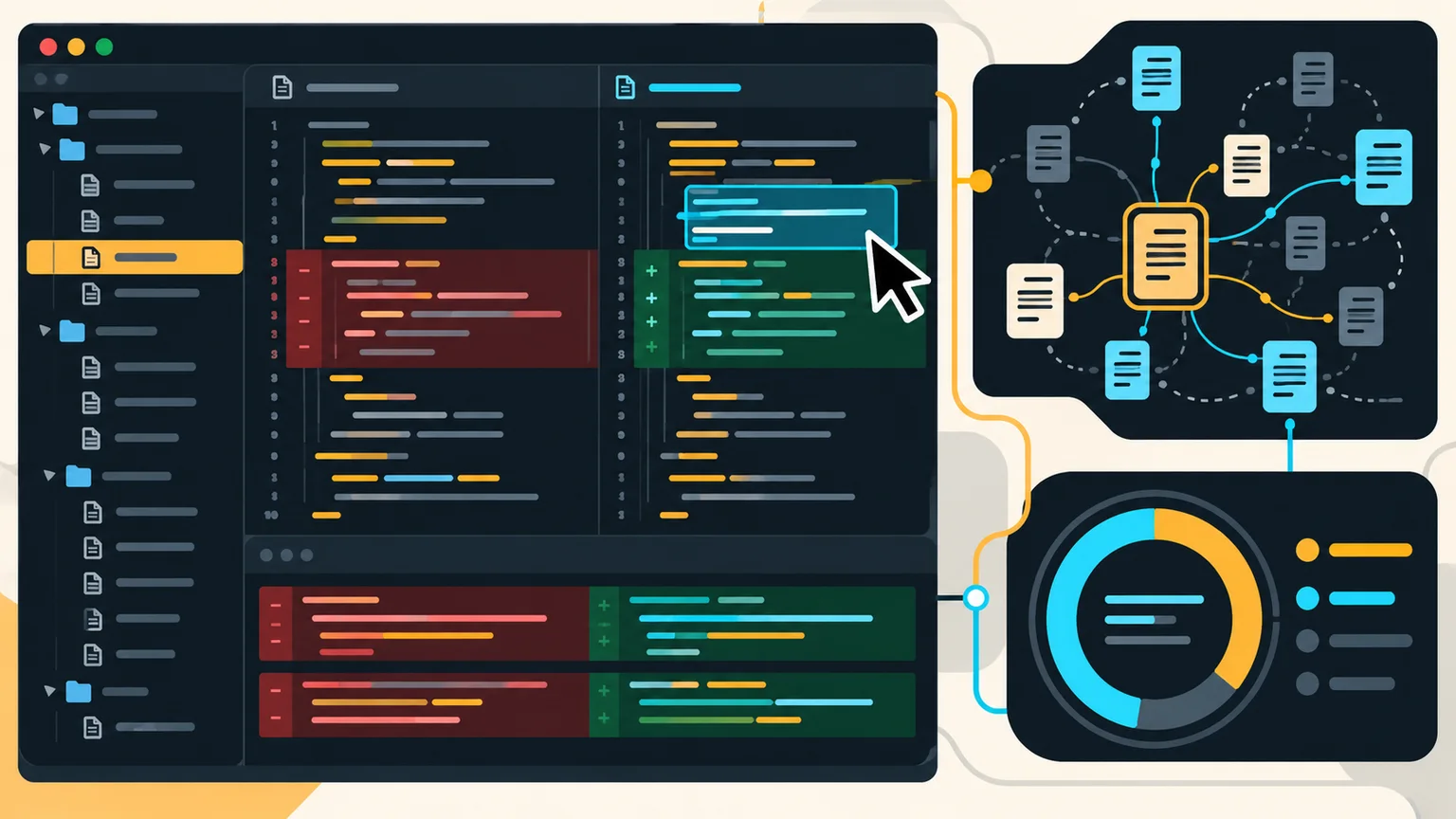
| Codex | A coding-agent product and harness | Inspect repositories, edit files, run commands, and verify work |
| OpenAI API | A developer platform | Build GPT-powered features into software |
The model supplies intelligence; the application supplies the interface, tools, data access, memory, permission system, and workflow. Read our Codex guide for the coding-agent layer.
What is a token?
A token is a unit a model uses to process text. It may represent a character, punctuation mark, part of a word, or a whole common word. Tokenization varies by model and language. OpenAI gives a rough English estimate of four characters or three-quarters of a word per token, but exact counts require the target model's tokenizer.
| Token type | Meaning | Why it matters |
|---|
| Input tokens | Prompt, messages, files, tool definitions, and other supplied context | Count toward context and input cost |
| Cached input tokens | Reusable input recognized through prompt caching | Can cost less and reduce latency |
| Output tokens | Generated response and billed model output | Usually cost more than input |
| Reasoning tokens | Internal tokens used by reasoning models | Can count toward usage even when not shown |
A plain text word count does not capture message formatting, tools, schemas, images, or files. Inspect the API response's usage fields or use the full input-token counting endpoint when exact budgeting matters. See OpenAI's token counting guide.
What is a context window?
The context window is the maximum number of tokens a model can work with in one request. It can include the input, output, and reasoning tokens. A large window can hold more documents or code, but size alone does not guarantee accuracy. Relevant, clearly structured context usually works better than a larger collection of noisy material.
Context window and knowledge cutoff are different. The context window controls how much information fits in the current request. The knowledge cutoff indicates the period covered by training data. Web search, retrieval, and supplied documents can provide newer information.
How GPT generates an answer
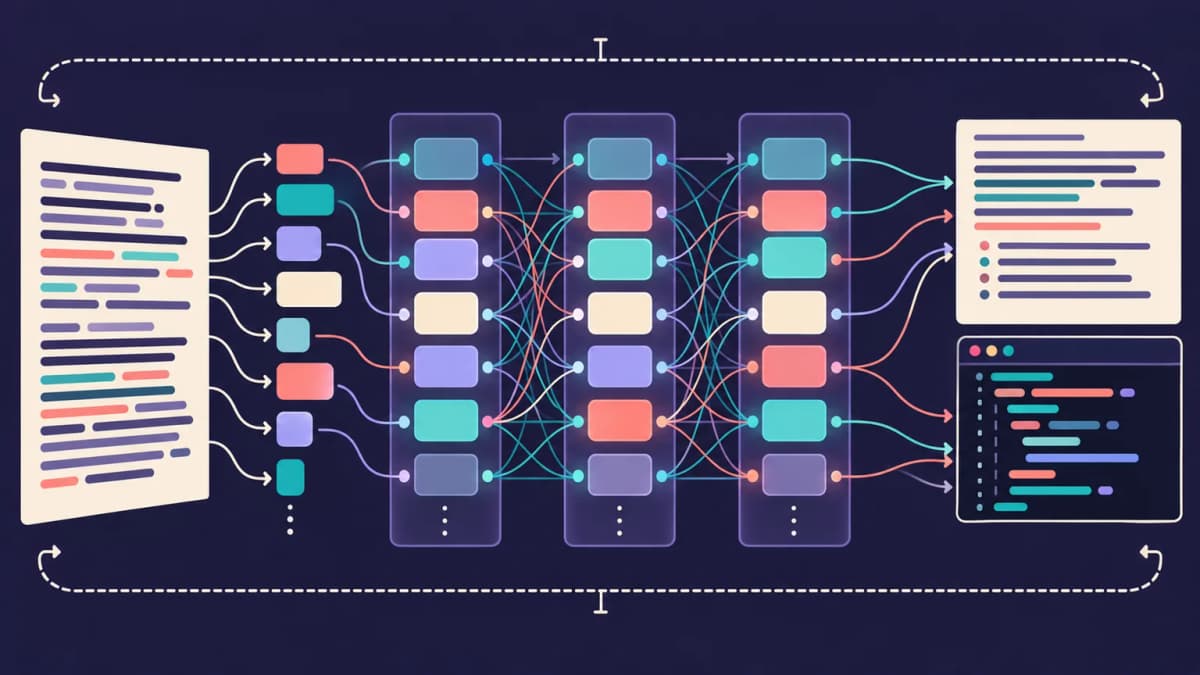
- Your application assembles instructions, conversation, and relevant context.
- The tokenizer converts that input into token IDs.
- The transformer processes relationships among the tokens.
- The model predicts output tokens step by step.
- An application may call tools, add their results, and ask the model to continue.
- The final tokens are converted into text or structured output.
This probabilistic process explains both GPT's flexibility and its limitations. It can generate a fluent answer even when the underlying claim is wrong.
Why GPT models hallucinate
A hallucination is a plausible-looking statement unsupported by reliable evidence. It can happen when the prompt is ambiguous, the requested fact is missing from context, the model overgeneralizes patterns, or the application does not verify tool results.